Sunday, 31 March 2013

Prince Albert II of Monaco Foundation renews its engagement to NBI conservation


Prince Albert II of Monaco Foundation, which is the species champion for Northern Bald Ibis, has renewed its conmitment towards the conservation of one of the most endangered birds in the world.

PA2MF has been funding mainly the wardens' expenditures (salaries and equipment), as well as other functioning costs. This is essential to the monitoring and surveillance in the colonies, and allow us to know about their behaviour, how they use their range or what are their breeding performances.

With this contribution, PA2MF is one of the most important partners for the conservation of this critically endangered species both the Moroccan and the eastern population.

Tuesday, 26 February 2013

Akh: NBI from Ancient Egypt

A couple of recent articles on NBI from Ancient Egypt, from the UCLA Encyclopedia of Egyptology.


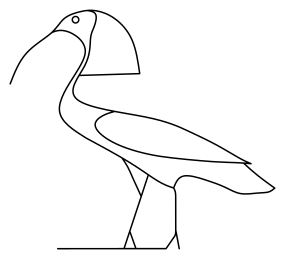
Three different kinds of ibis species are attested from ancient Egypt: the sacred ibis, the glossy ibis, and the northern bald ibis. Pictorial representations of the latter bird—easily recognizable by the shape of its body, the shorter legs, long curved beak, and the typical crest covering the back of the head—were used in writings of the noun akh and related words and notions (e.g., the blessed dead). We can deduce from modern observations that in ancient times this member of the ibis species used to dwell on rocky cliffs on the eastern bank of the Nile, that is, at the very place designated as the ideal rebirth and resurrection region (the akhet). Thus, the northern bald ibises might have been viewed as visitors and messengers from the other world—earthly manifestations of the blessed dead (the akhu). 


Janák, Jíří. (2013). Akh. UCLA Encyclopedia of Egyptology, 1(1). nelc_uee_8790. 

Saturday, 12 January 2013

NBI at Boujdour

Although young NBI records are not extremely rare in the Atlantic Sahara, specially in Boujdor, every single sighting is very important to understand the behaviour of the species.


Recently, Hugues Dufourny reported to http://www.go-south.org/ the sighting of one sub-adult bald ibis at Boujdour, on December 27th.

On the pictures (©Véronique Buchet) we can observe the kind of habitat on the coast in the region, while the dominant area is much more drier. Constant wind makes plastics fly and they stay on the browses.

In the same site web, Runar Jåbekk cited two other NBI at Boujdour in february 2012.

Every single sighting of Northern Bald Ibis outside Tamri and Souss-Massa area is extremely important to improve the knowledge on the species and improve its status. Please, share your redords with us. 

Tuesday, 1 January 2013

2012 breeding season results

2012 breeding season finished with uneven results in Souss Massa National Park and Tamri regarding breeding success.

Monitoring takes place thanks to the seven wardens that are permanently on place, supported by Prince Albert II of Monaco Foundation.

While in the protected area results were quite usual, similar to previous year, in Tamri we have recorded a failure on breeding success. Thus, in Souss-Massa 34 pairs nested (two less than in 2011) and 95 chicks hatched (one less that in 2011). 56 of them fledged (vs. 79 in 2011), thus survival was lower that last year (1,03 against 1,3). Nevertheless, at Tamri there were less pairs formed, 43 vs. 51 during the previous season. This should not be a problem, but just 11 of them lay eggs. None of them finished the incubation period.

It is not clear what the causes of the failure are, but, comparing this situation with previous years, we found that results were also bad in 2008. That year, there were 55 fledgings in Souss Massa and two in Tamri.

Although many factors could affect breeding, we found that 2008 was also a dry year; the first trimester had just 21 mm being the average for that period 99 mm. In 2012 rainfall was jus 6 mm in that period.

Wednesday, 14 November 2012

1st meeting of the AEWA NBI International Working Group

The first meeting of the AEWA Northern Bald Ibis International Working Group will take place at the Jazan University in Jazan, Saudi Arabia on Monday the 19th to Thursday the 22nd of November 2012 at the kind invitation of the Saudi Wildlife Authority and Jazan University.

After convening the Working Group in 2011 as foreseen in the AEWA International Single Species Action Plan for the Conservation of the Northern Bald Ibis, a first face to face meeting with the appointed representatives from all the seven range states as well as other international experts will take place.

Following the Terms of Reference for the Working Group, the meeting will focus on setting up and agreeing on Working Group functions (electing a Chair country, confirming observers to the Working Group and discussing budgetary issues) and identifying international priority measures for the Northern Bald Ibis on the basis of the AEWA International Single Species Action Plan.
Since its adoption in 2005 the plan has become largely outdated and this meeting presents an excellent opportunity to launch its revision process.
Different conservation actions resulting from the identified priority measures will also be discussed.

Tuesday, 23 October 2012

Aylal, again at Tamri


Aylal, which was based in the Douira area since April, has been making trips eastwards, sometimes up to 18 kilometres inland. Occasionally there was also a shift to the south to the Souss-Massa National Park limits.
On October 19th, however, in the morning, it moved northwards, stopping at Cape Ghir and finishing at Tamri area, where it has been spending last days.

Friday, 12 October 2012

US Fish and Wildlife Service supports NBI

The US Fish and Wildlife Service has awarded Northern Bald Ibis conservation project with US$24,821 through its Wildlife Without Borders programme.

This is one of only twelve selected for funding, out of one hundred proposals received.

Those funds will be used to improve knowledge about movements of NBI as well as for improving breeding habitat and roosts, as well as trying to attrack birds to deserted colonies.

Another recent contribution from the Mohamed bin Zayed Species Conservation Fund will also help to improve knowledge about the movements of the species.


Sunday, 7 October 2012

Northern Bald Ibis in Ancient Egypt

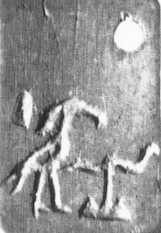
In 1989, Gunter Dreyer discovered in a tomb at Abydos, 300 miles south of Cairo, ivory or bone tablets some 5,400 years old, that reveal one of the oldest known stage of the hieroglyphic writing. Those small plates, about three centimeters squared, were probably used as labels to show the origin and content of boxes and containers. Among more than 200 pieces, one represents, apparently, a Northern Bald Ibis.

Akh, about -3400
Since then, a crested ibis has represented the hieroglyph Akh, having probably an phonetic correlation between the bird and the concept.
Representing Akh besides a solar disk is very common  
The Akh is one of the five constituents of the human personality which becomes eternal and unchanged in the Death Realm. Akh also means "to be resplendent, to shine", wich could be related to the glossy Northern Bald Ibis feathers.

Northern bald ibis as Egyptian hieroglyph
Another Akh in a sunk-relief 


The coloured versions of the Akh seem to diverge from the natural colour pattern. This is probably due to the fact of a progressive decline of Northern Bald Ibis. The material and pictorial evidence dealing with the northern bald ibis is much more accurate, precise, and elaborate in the early periods of Egyptian history (until the end of the 3rd millennium BC) while, in later times, the representations become more and more schematized, showing probably that the artists were no familiar to the bird in the late phase because ok the extinction of the species in Egypt.

More information about Northern Bald Ibis in Egypt is available on this interesting work by Jiří Janák.


Tuesday, 2 October 2012

Untagged NBI in Spain


As a result of the recent sight of an untagged NBI in Manchester (UK) it's worth to remember other non-ringed birds that have been spotted in the last decade. On  http://rarebirdspain.net there's information on those records in Spain. 
Sightings of NBI in Spain are extremely rare during 20th century. The only known observation of this species was in Doñana, Southern Spain, in 1958. Nevertheless in 2004 one specimen was observed in very good condition in La Aldehuela (more than 1000 m osl), Ávila (Central Spain) between December 17th and 22th.  Apparently, the bird was there since one month before.
Northern bald ibis in Ávila (M. Rouco)
Observations stopped when temperatures became rougher.
Another image of the same animal  (M.Rouco)

During the same month another individual was seen in Extremadura. In this case, it was a young bird observed between December 1st and 6th and again, between March 24rd and 27th, 2005, near  Trujillo, Cáceres
Young NBI in Cáceres, on the ruins of  de Santo Domingo church (J. Briz)
This bird was still seen through a total of ten months  (Prieta, J. y Mayordomo, S. 2011. Aves de Extremadura. Vol. 4. Anuario 2004-2008. SEO-Cáceres. Plasencia), though its fitness was slowly deteriorated at the end of September, 2005.

The potential arrival of Moroccan birds is very unlikely, given the distance and the lack of observations in the last decades. Apparently, both birds came from any private owned zoological park having its birds untagged and whose facilities are inadequate to keep birds safe and secure. 

More recently, a SEO/BirdLife's team spotted another untagged NBI in southern Spain. In this case was, again, one young bird. Different sightings belonging, probably, to the same bird occured between February and May 2012, in the area of the Campiñas of Eastern Seville. This location is not far from the place were "proyecto Eremita" are been released and where they nest. It this case, we cannot rule out that any wild-born bird from released individuals has escaped to the compulsory tagging.


Related Posts Plugin for WordPress, Blogger...